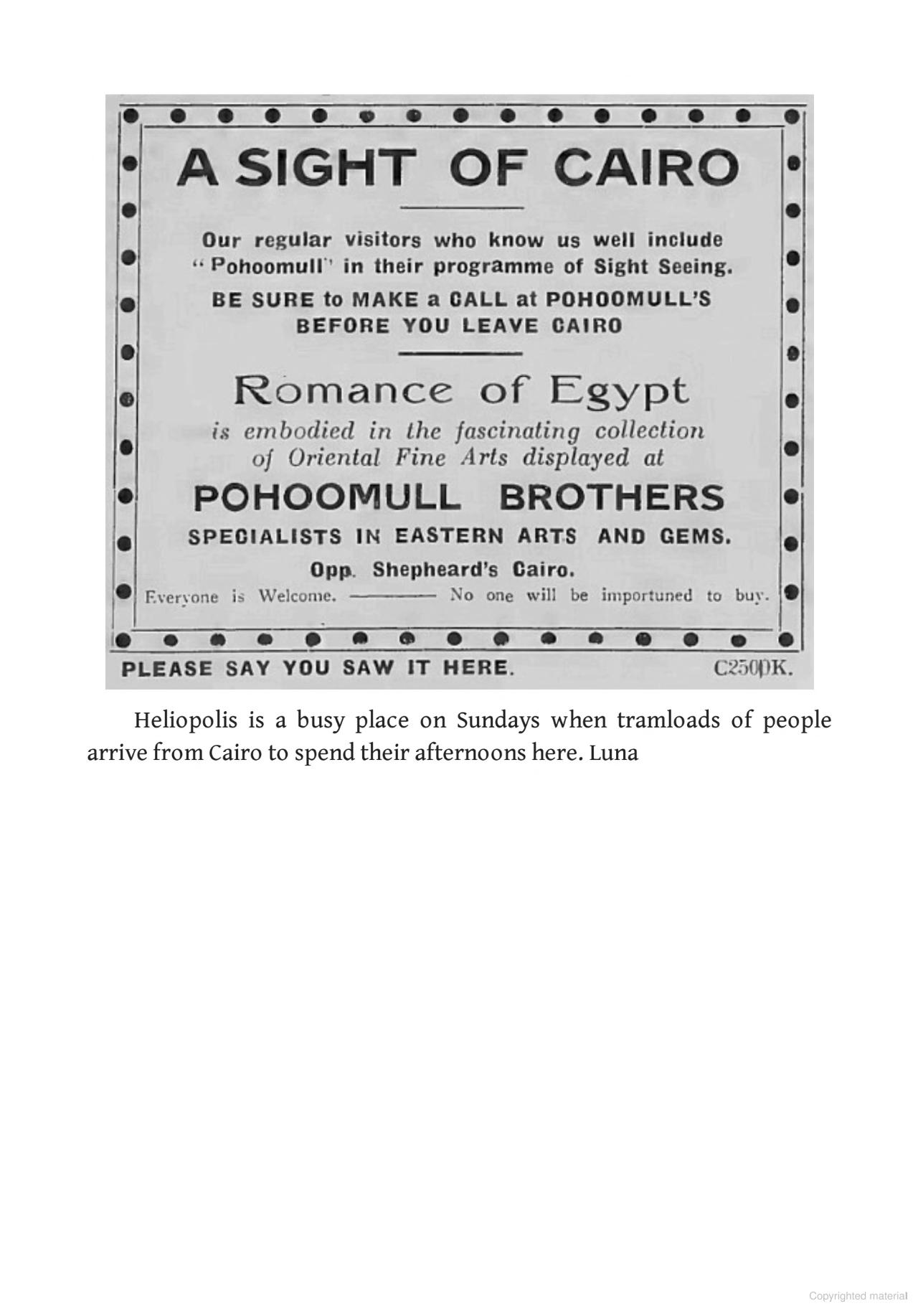
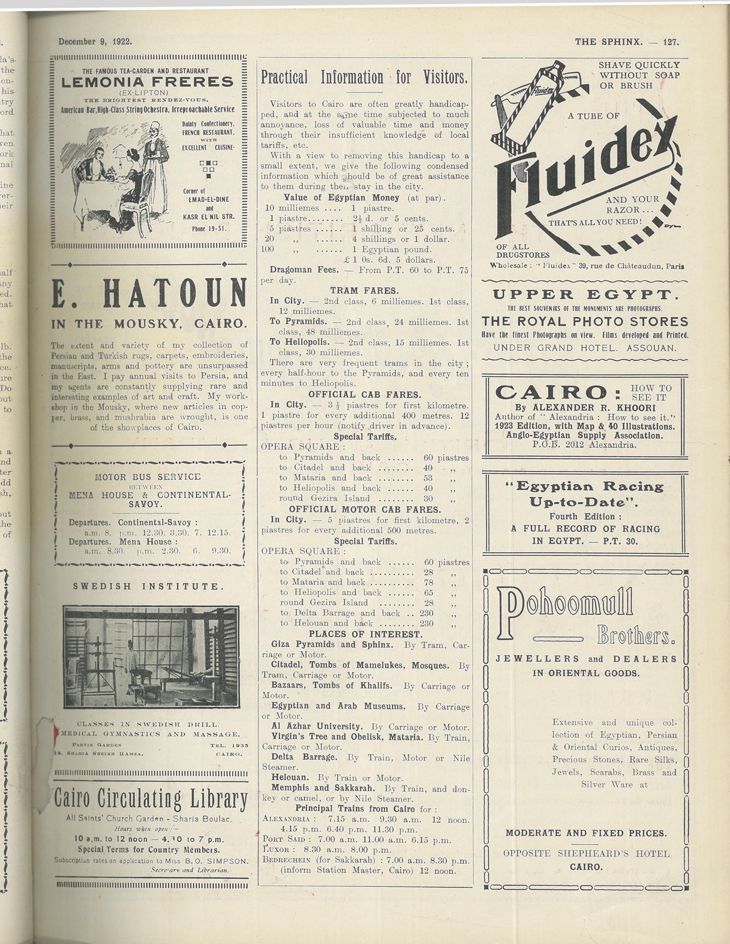
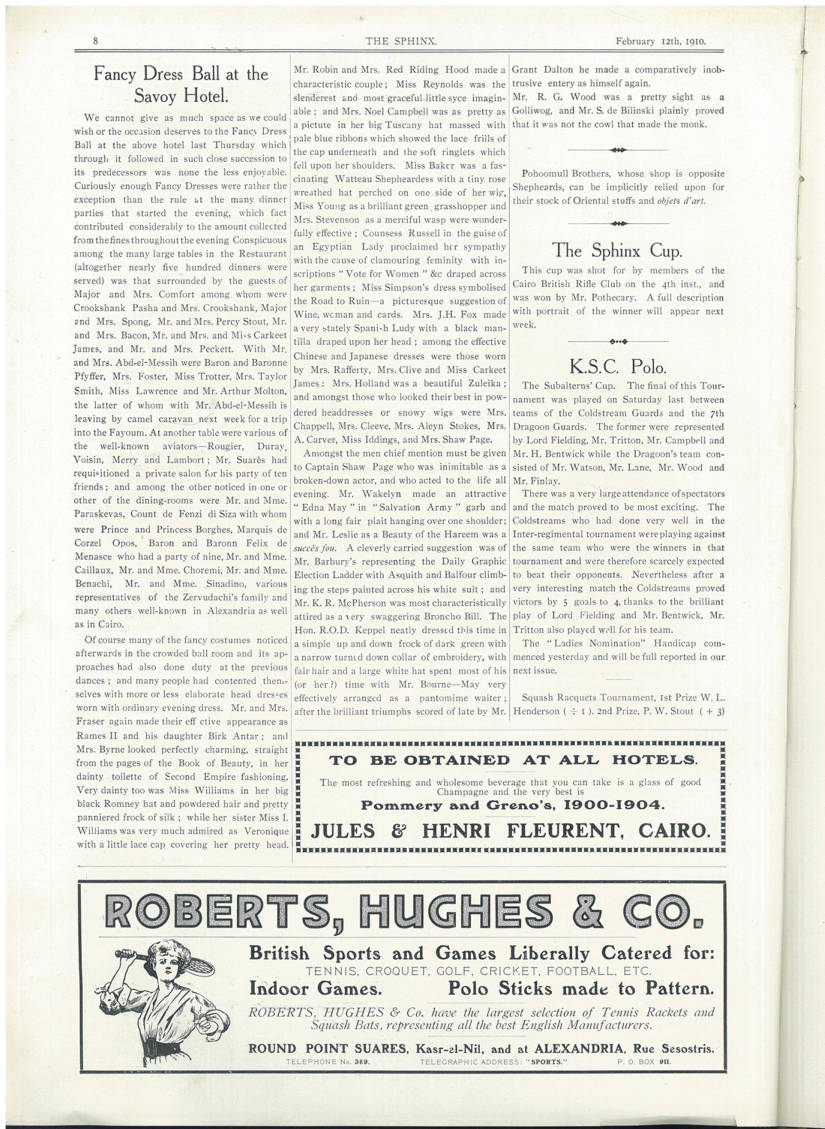
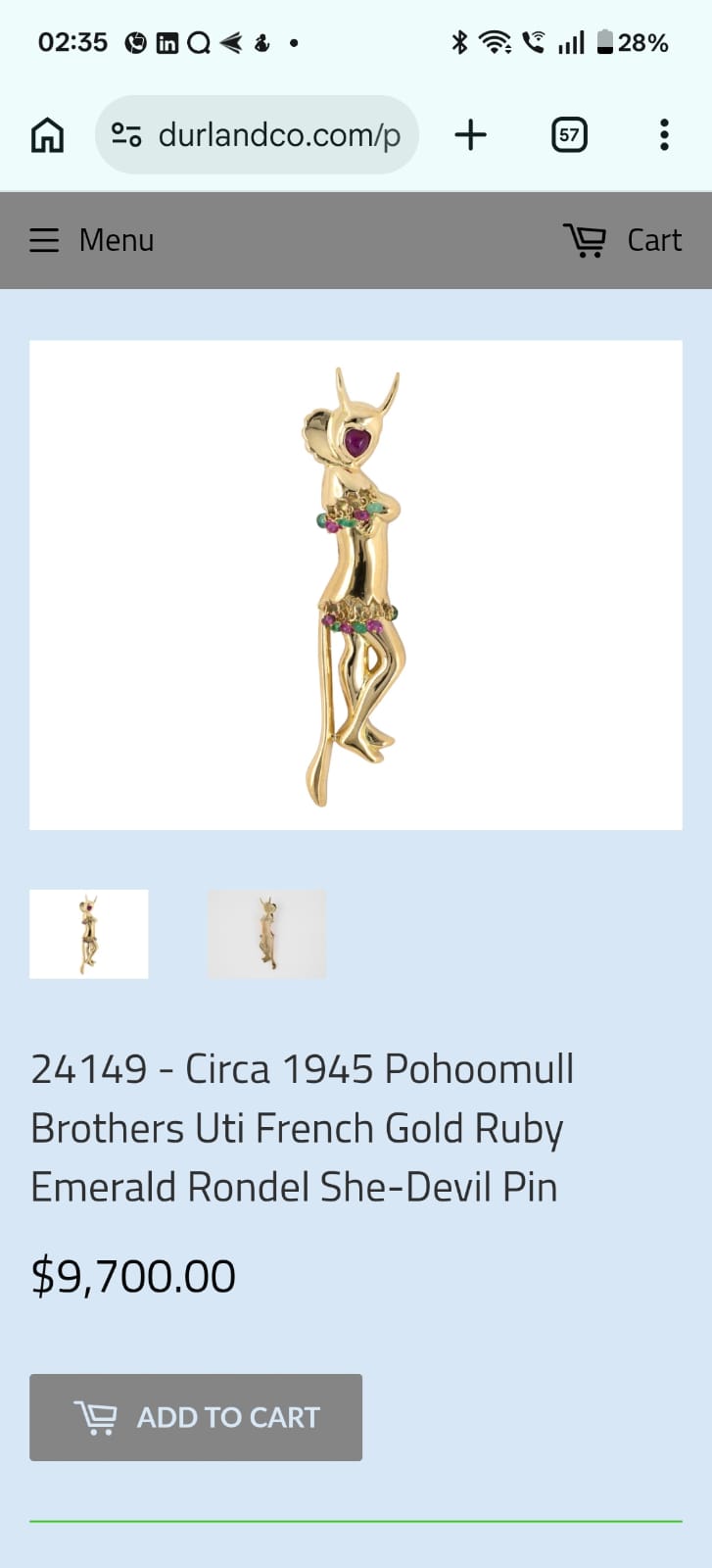
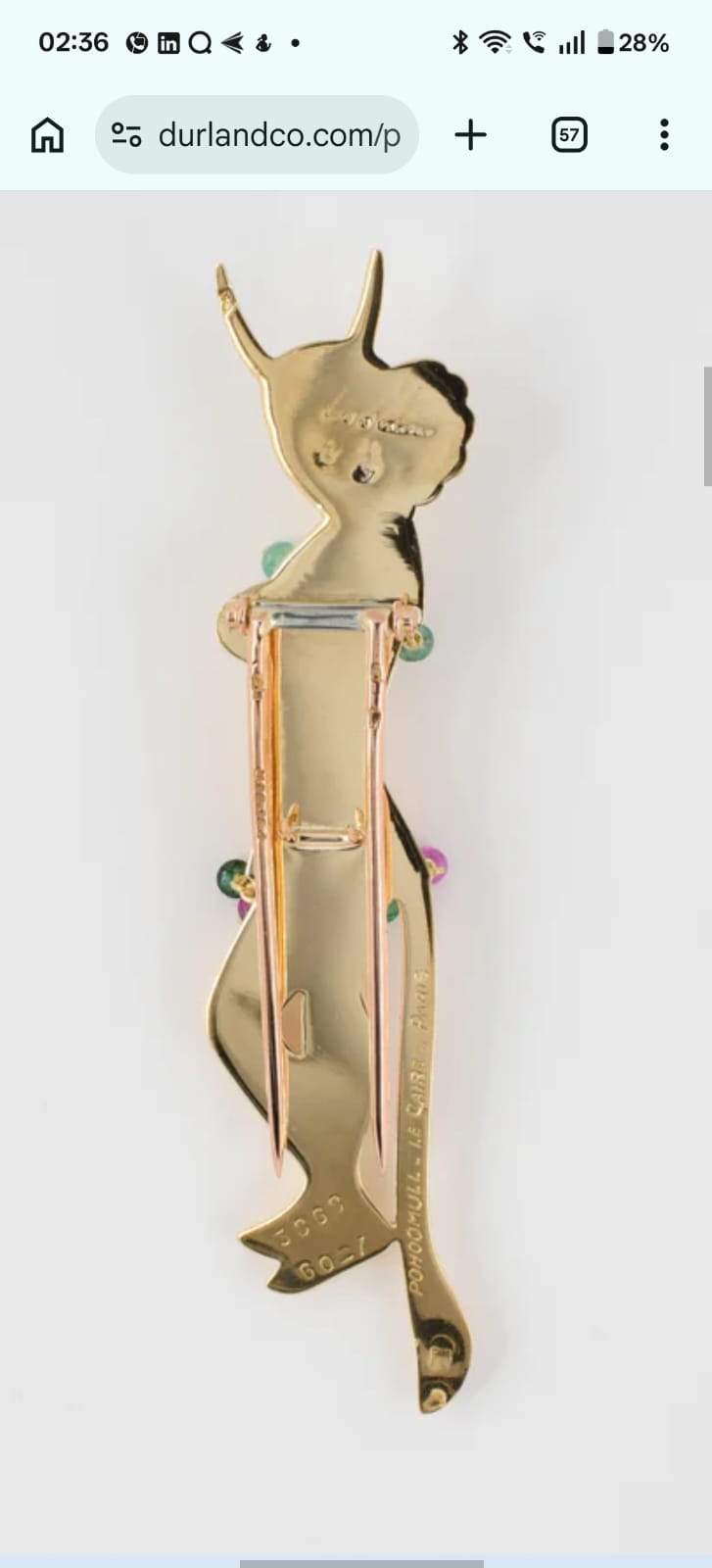
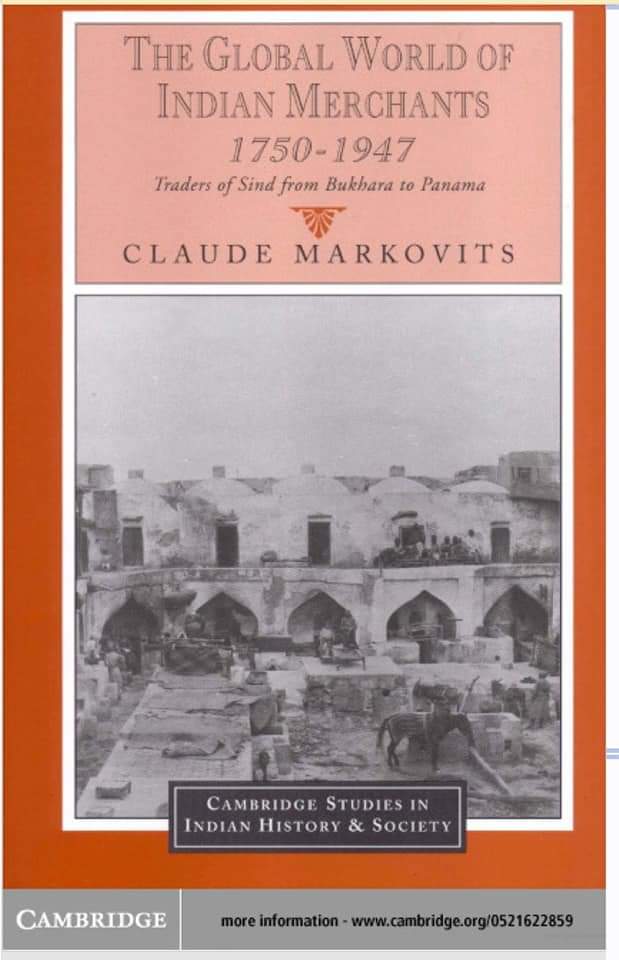
Page 125 · The Mother Firm
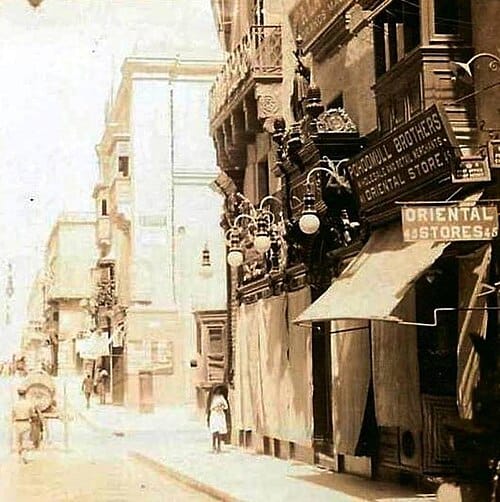
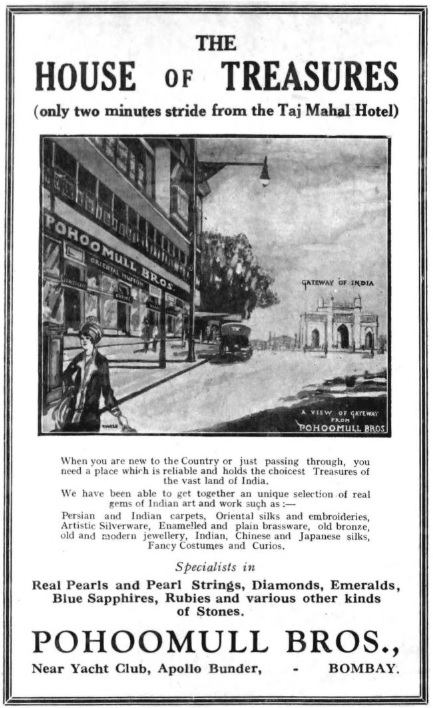
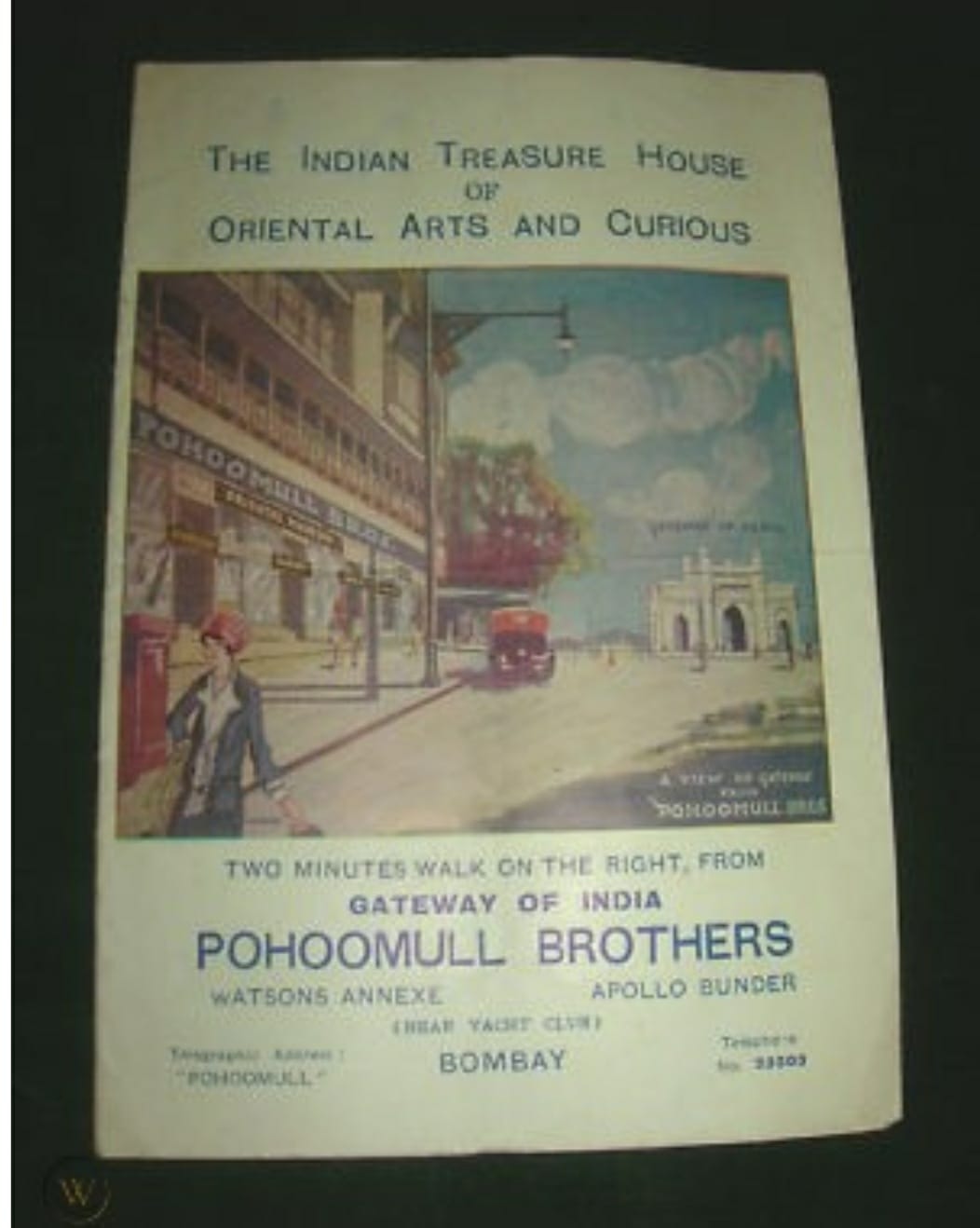
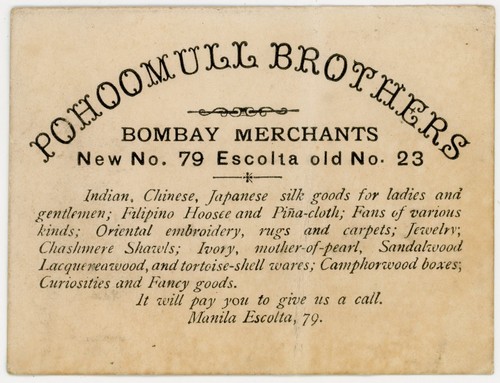
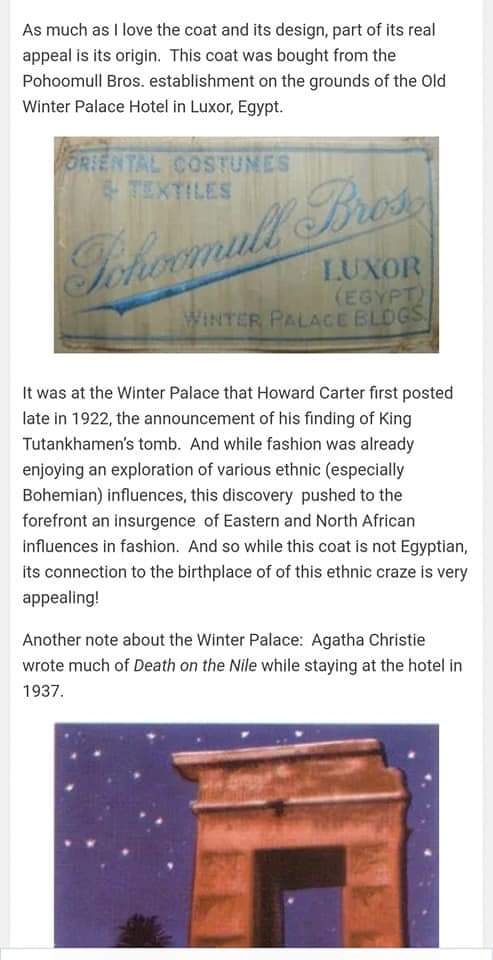
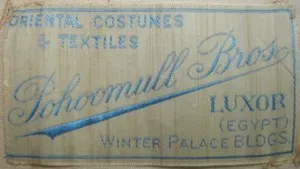
"There were a few 'mother firms' from which the entire network sprang. The two most important of these 'mother firms' were the firm of Pohoomull Bros, created in 1858, from which a good part of the western branch of the network originated."
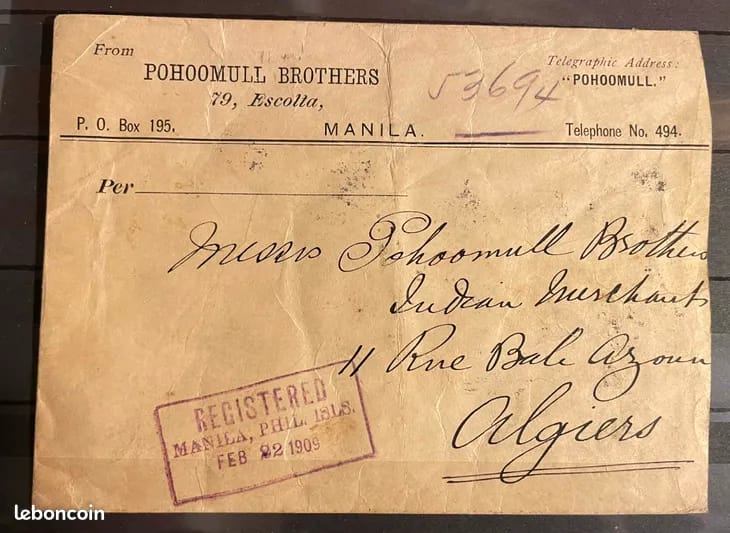
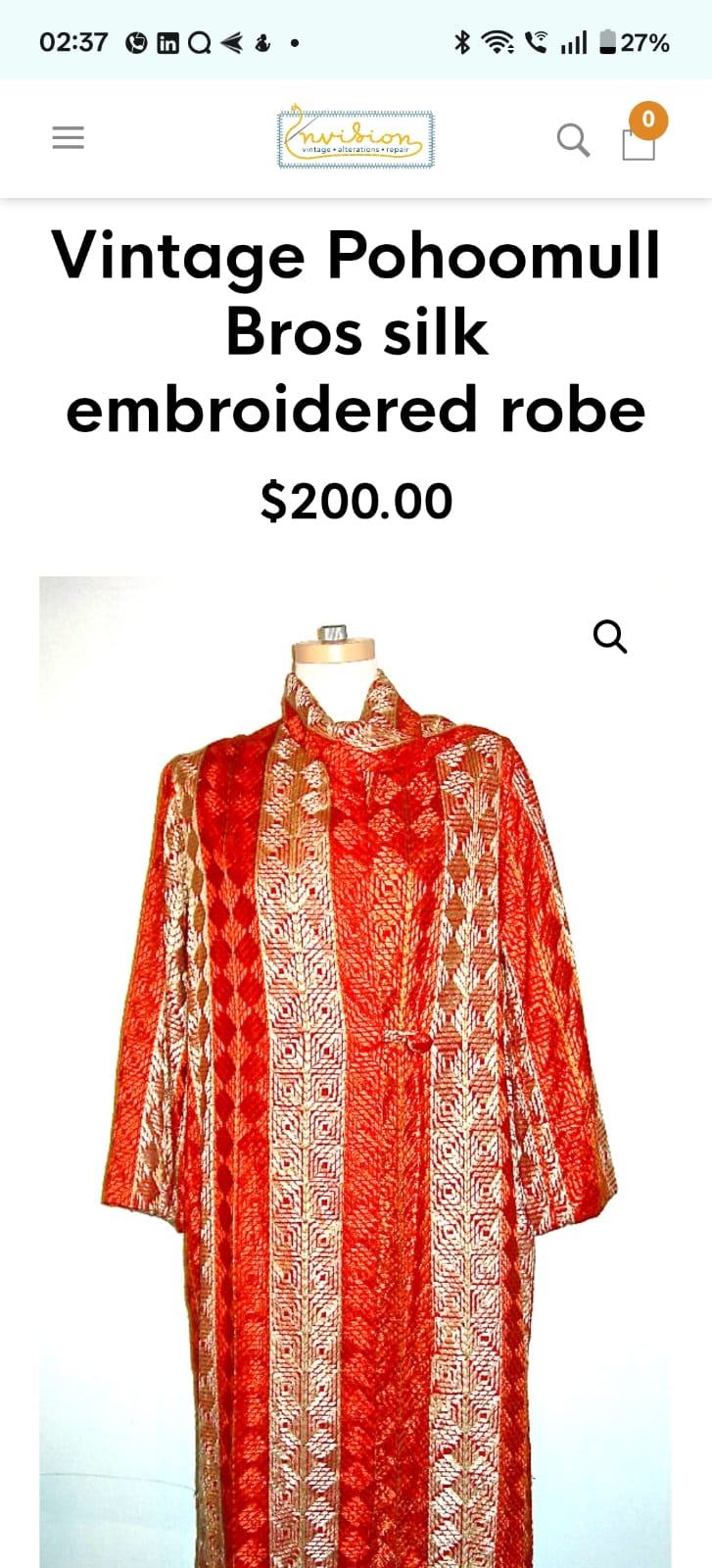
The oldest and largest of all Sindwork firms
Page 133 · The Astrologer's Wager
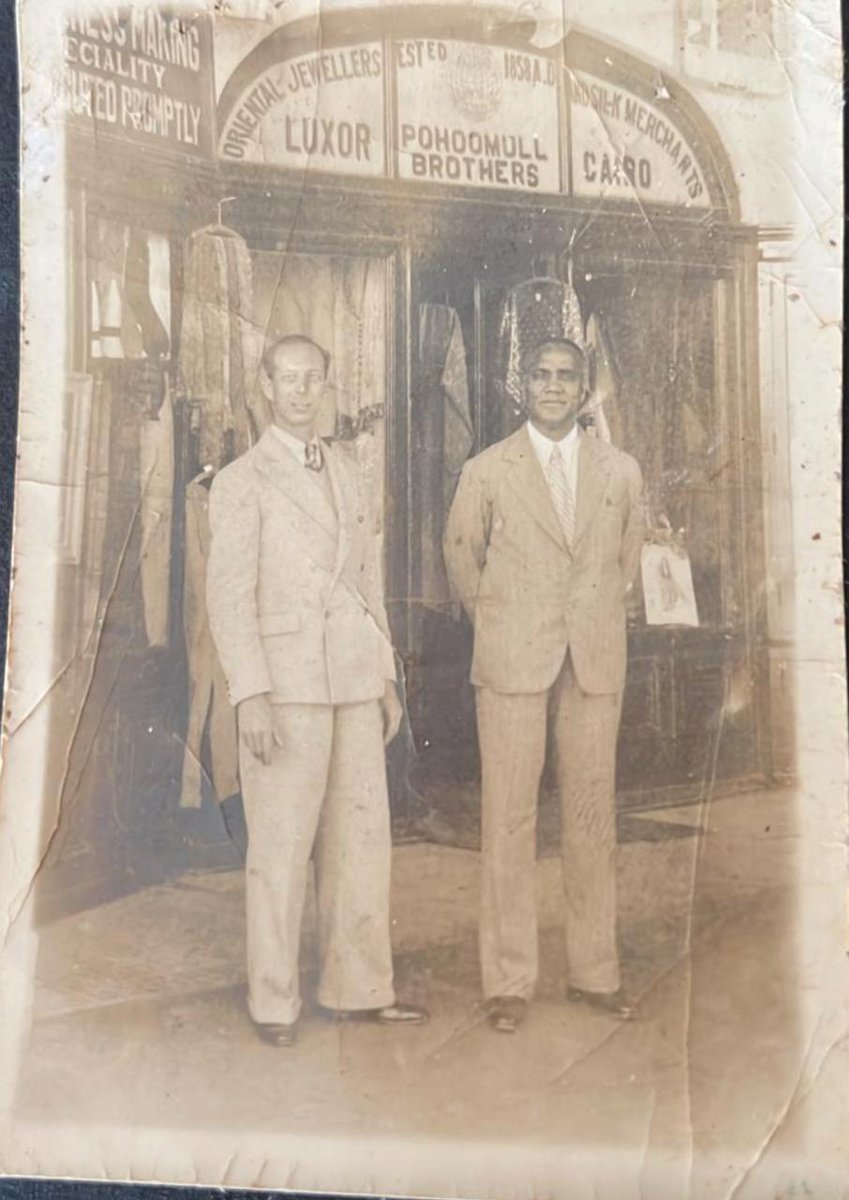
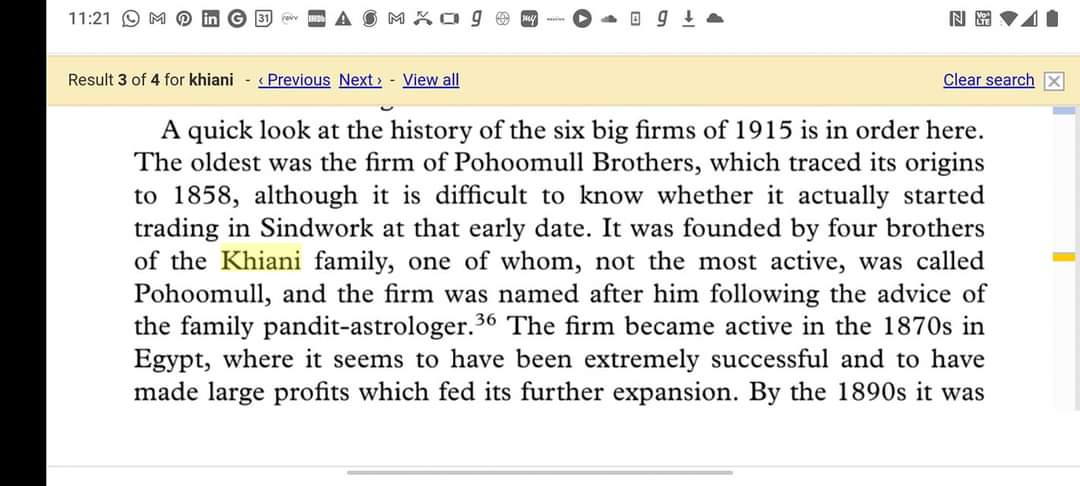
"The oldest was the firm of Pohoomull Brothers, which traced its origins to 1858. It was founded by four brothers of the Khiani family, one of whom, not the most active, was called Pohoomull, and the firm was named after him following the advice of the family pandit-astrologer."
Footnoted to Markovits's interview with Mr L. Khiani, Gibraltar, 4 September 1992
Page 133 · The 22 Branches
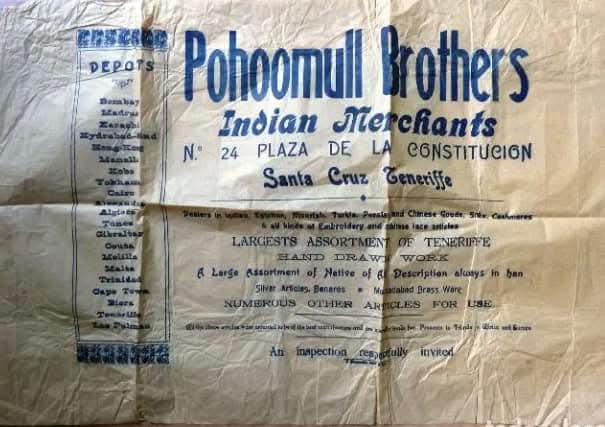
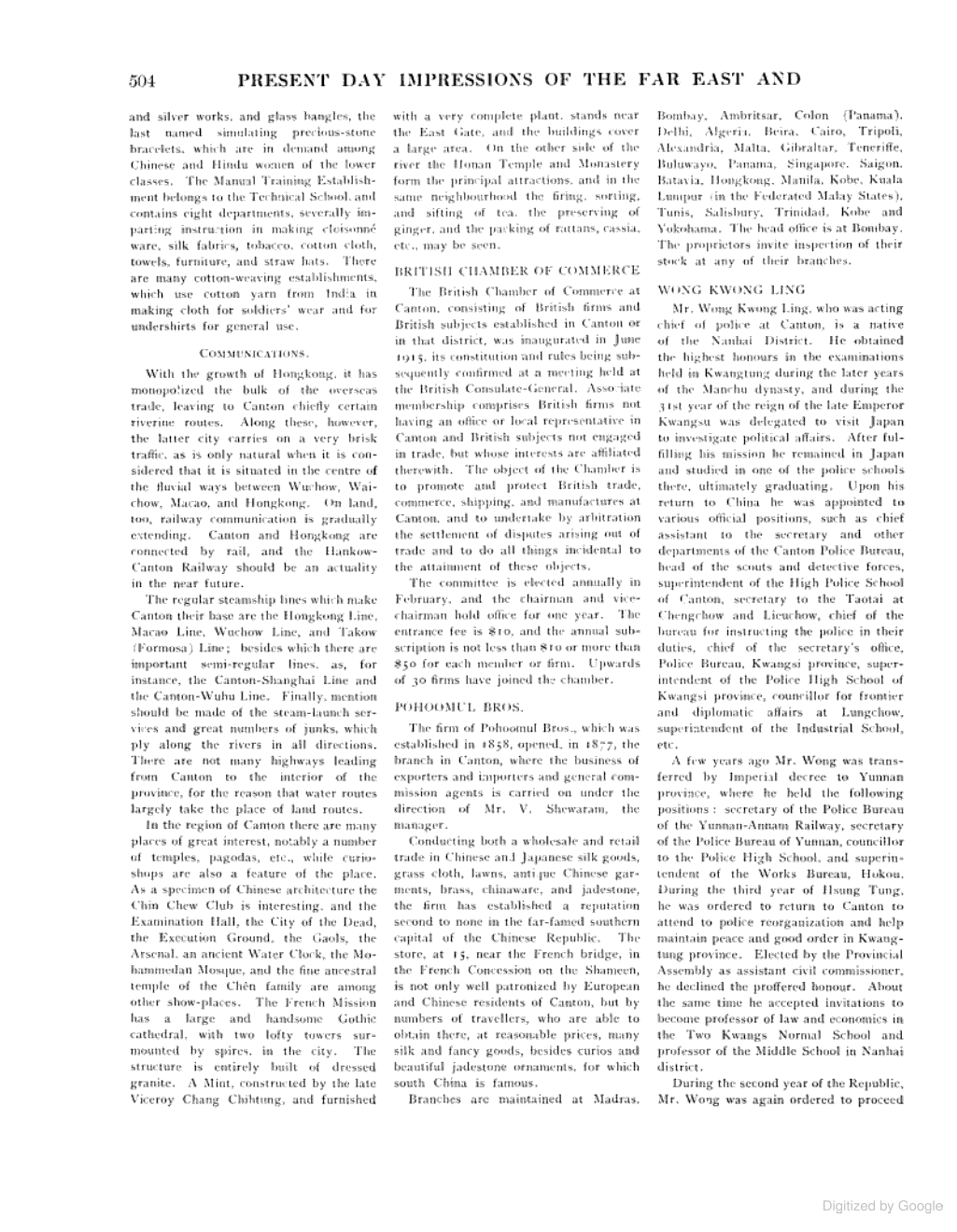
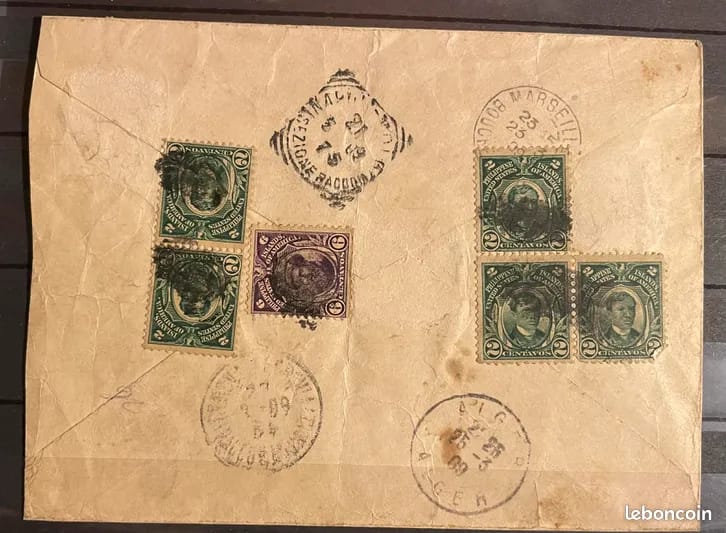
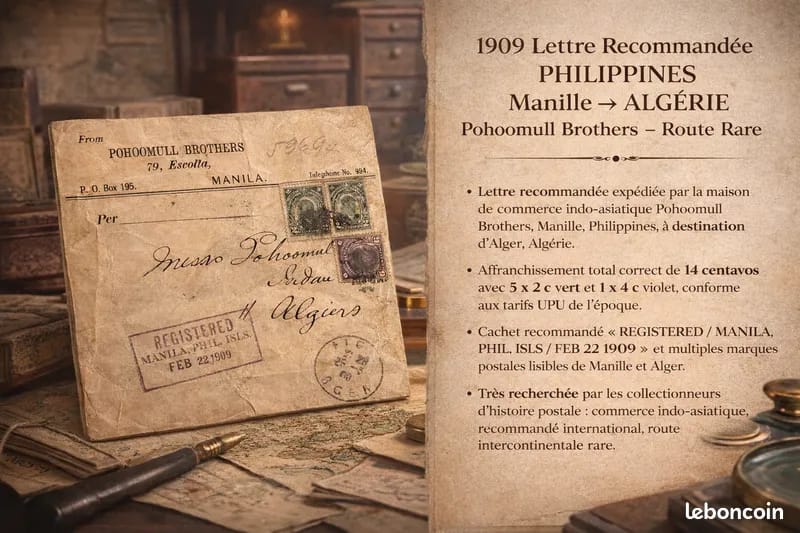
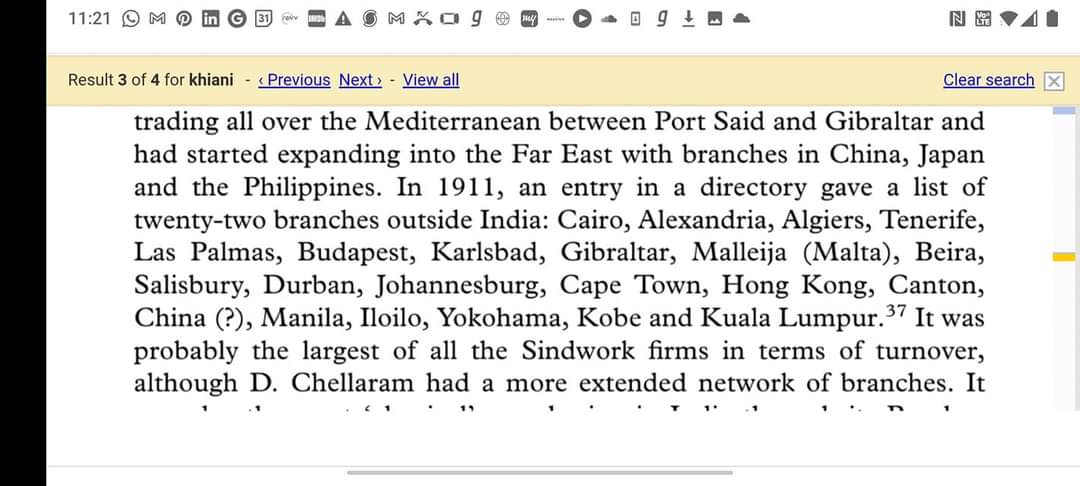
"In 1911, an entry in a directory gave a list of twenty-two branches outside India: Cairo, Alexandria, Algiers, Tenerife, Las Palmas, Budapest, Karlsbad, Gibraltar, Malleija (Malta), Beira, Salisbury, Durban, Johannesburg, Cape Town, Hong Kong, Canton, China (?), Manila, Iloilo, Yokohama, Kobe and Kuala Lumpur. It was probably the largest of all the Sindwork firms in terms of turnover."
The network at scale · five continents by 1911
Page 132 · The Global Firm
"Even among the six largest firms, there was a clear distinction between two subtypes: the 'global' firm, with branches across the world, of which D. Chellaram and Pohoomull Bros. were the two most conspicuous examples."
Classified as one of only two truly global Sindwork firms
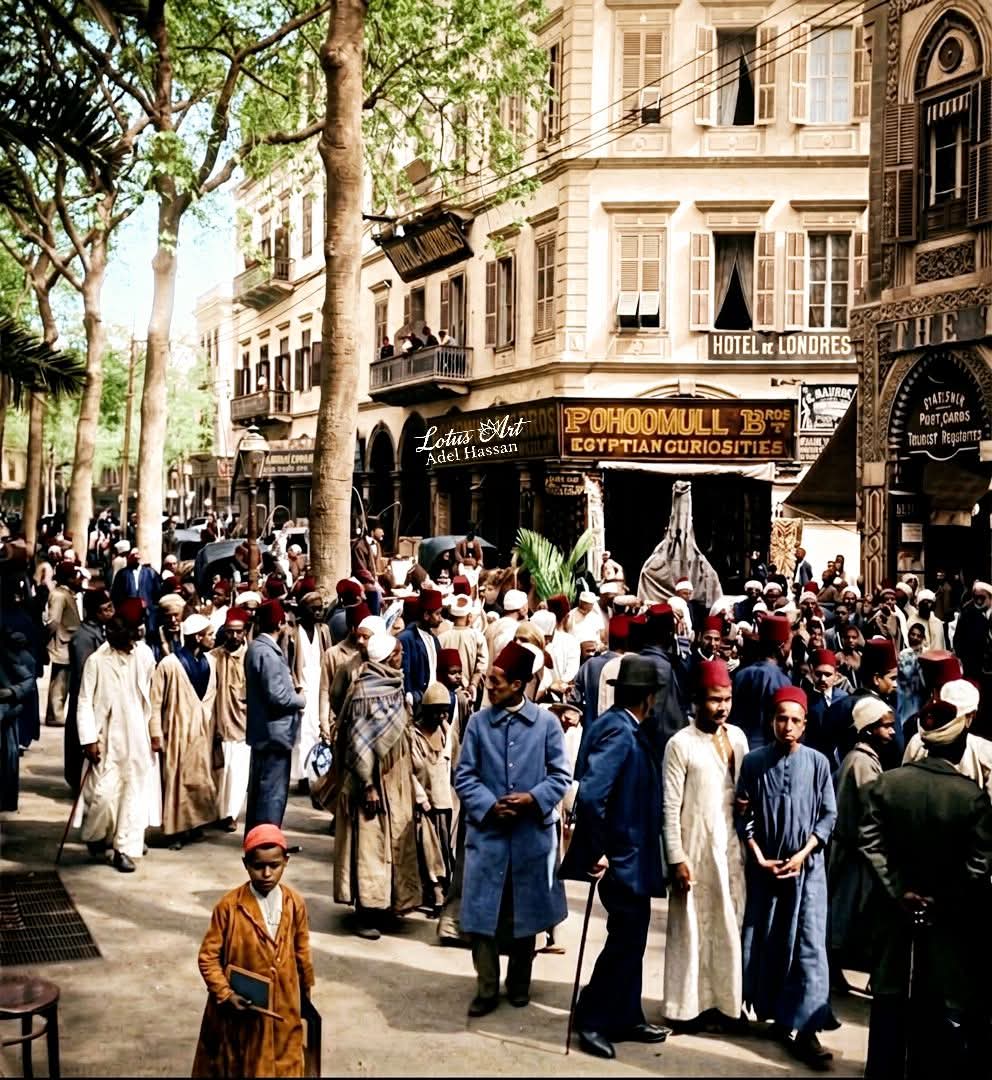
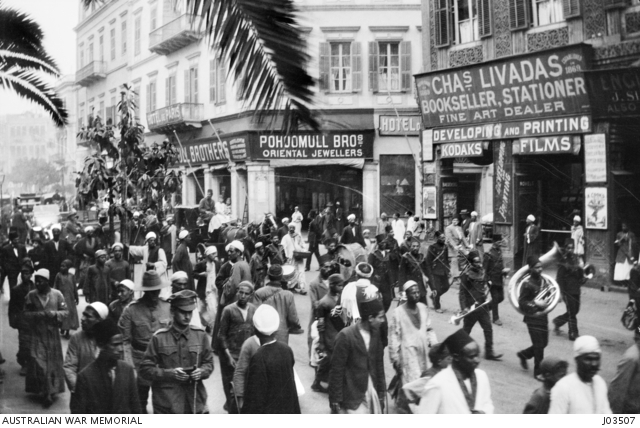
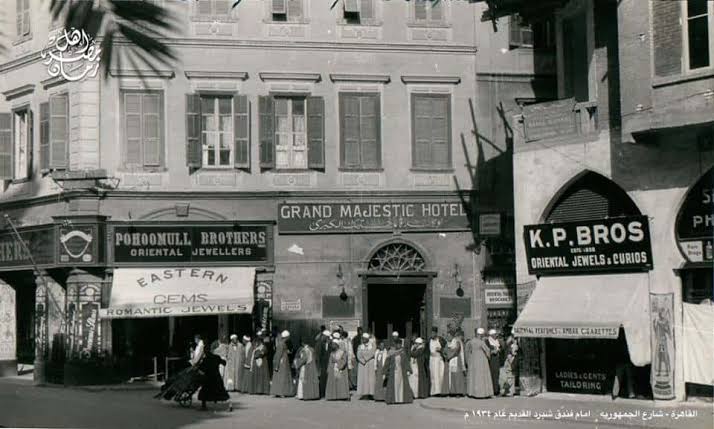
Page 150 · Cairo as Headquarters
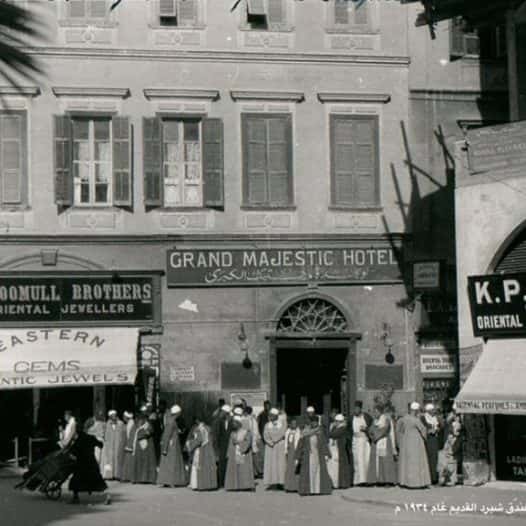
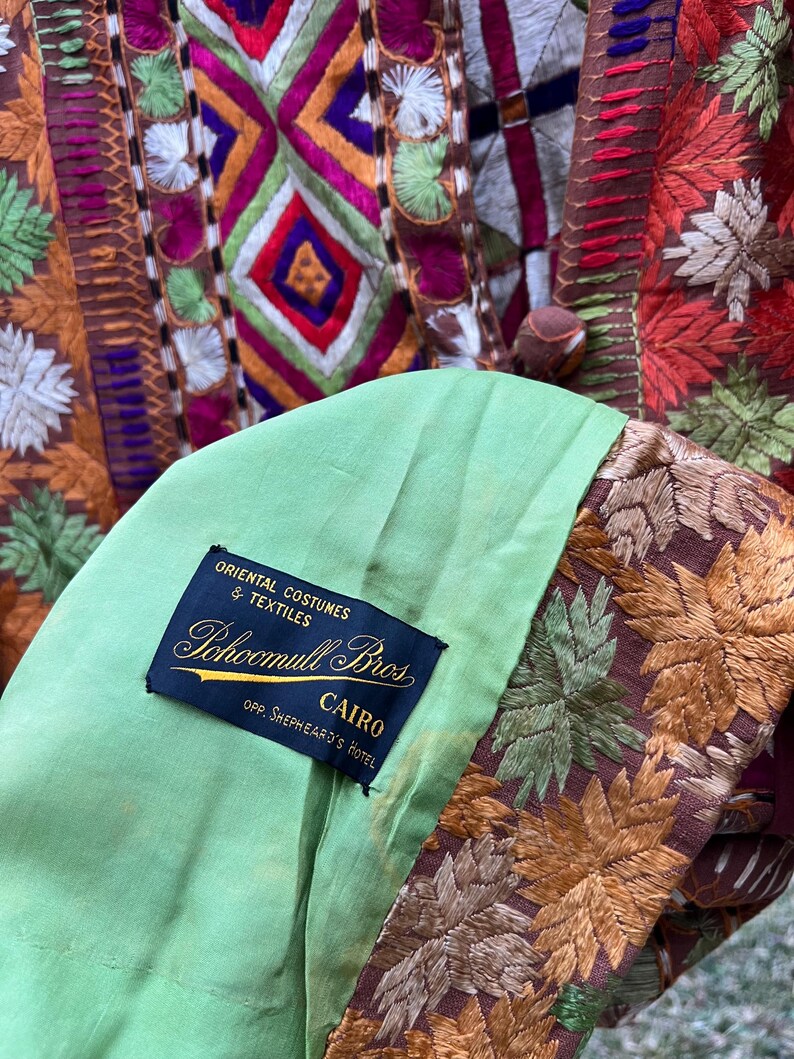
"Cairo was the major entrepôt for Sindwork firms in Egypt and the eastern Mediterranean. Its role was particularly important prior the First World War, when Egypt still accounted for a large share of the global turnover of the Sindwork firms."
The nerve centre of the western network
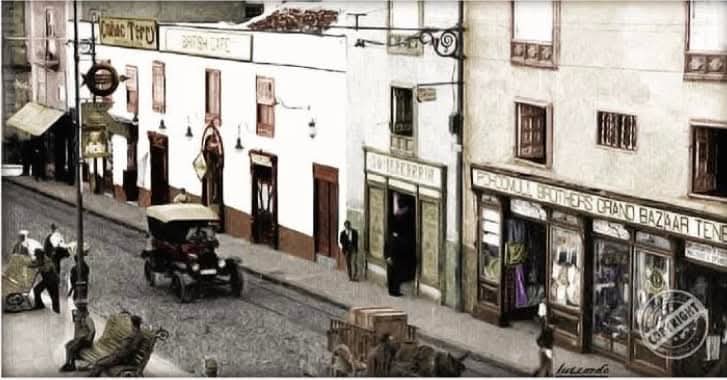
Page 150 · Gibraltar · ‘Bombay Street’
"Gibraltar was a major entrepôt for the entire western leg of the network. From their depots there, Sindwork firms supplied their retailing establishments in the whole of North Africa, the Canary Islands, and West Africa, and even, prior to the First World War, in Central and South America."
The western hub · still operating today
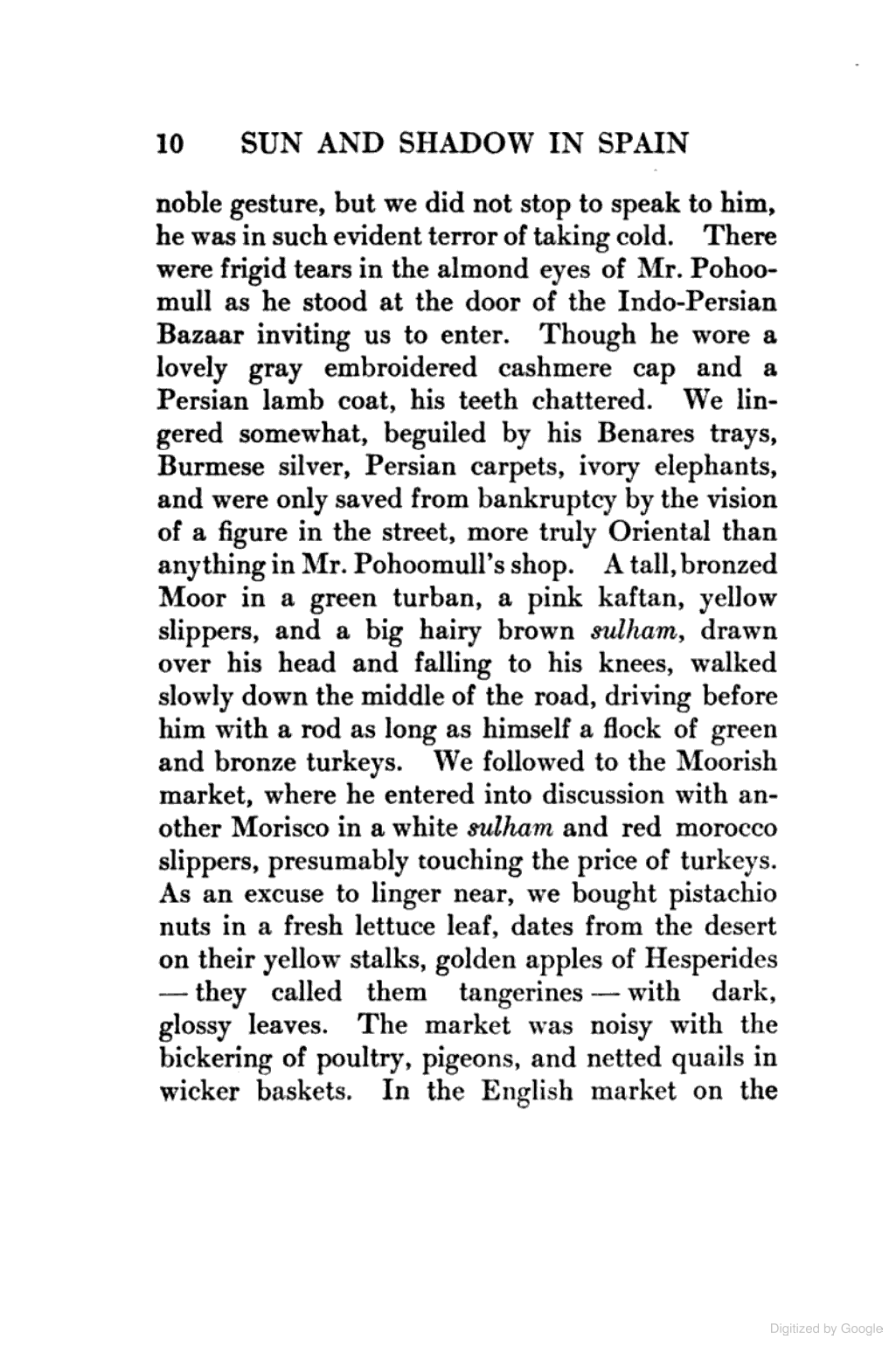
Page 151 · The Canary Islands
"Prior to the Spanish Civil War, there was a colony of around 100 Sindhi merchants in the Canary Islands, of whom 60 were in Tenerife, 35 in Las Palmas, and 5 in an unnamed island of the archipelago."
The Spanish network before Franco
Page 180 · Palatial Mansions
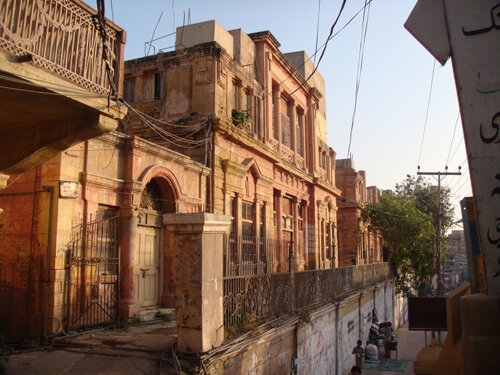
"A lot of money undoubtedly went into building palatial mansions in Hirabad, where the principals of the Sindwork trade had their residences. No wonder that Hyderabad was known as the 'little Paris' of Sind and gave travellers and officials an impression of wealth."
Where the money went home to
Page 199 · The Hyderabad Workshop
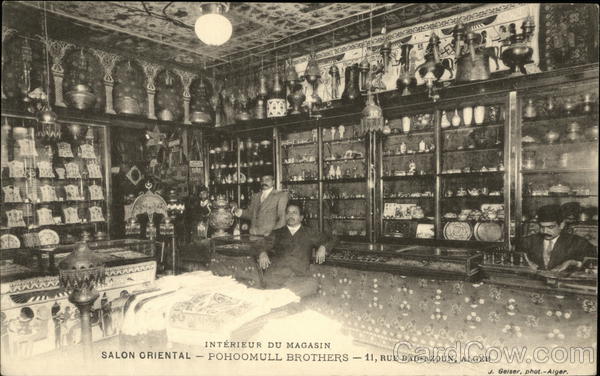
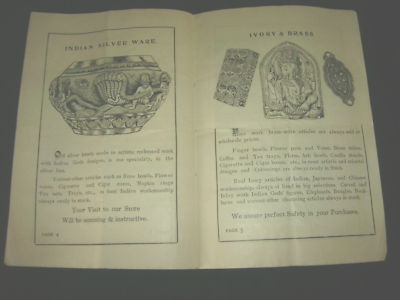
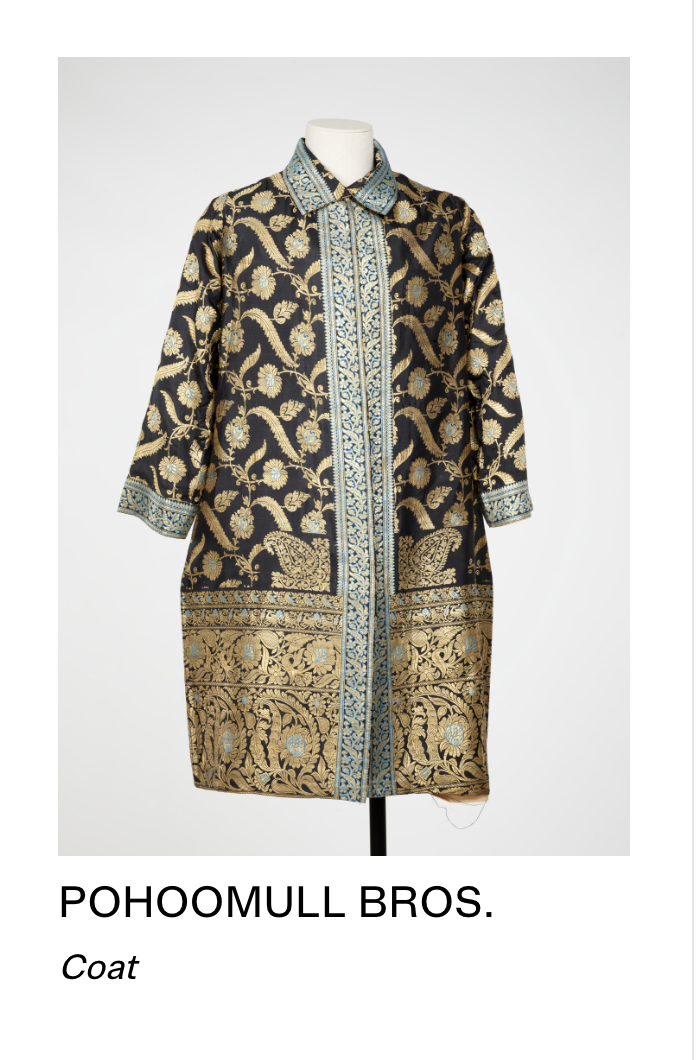
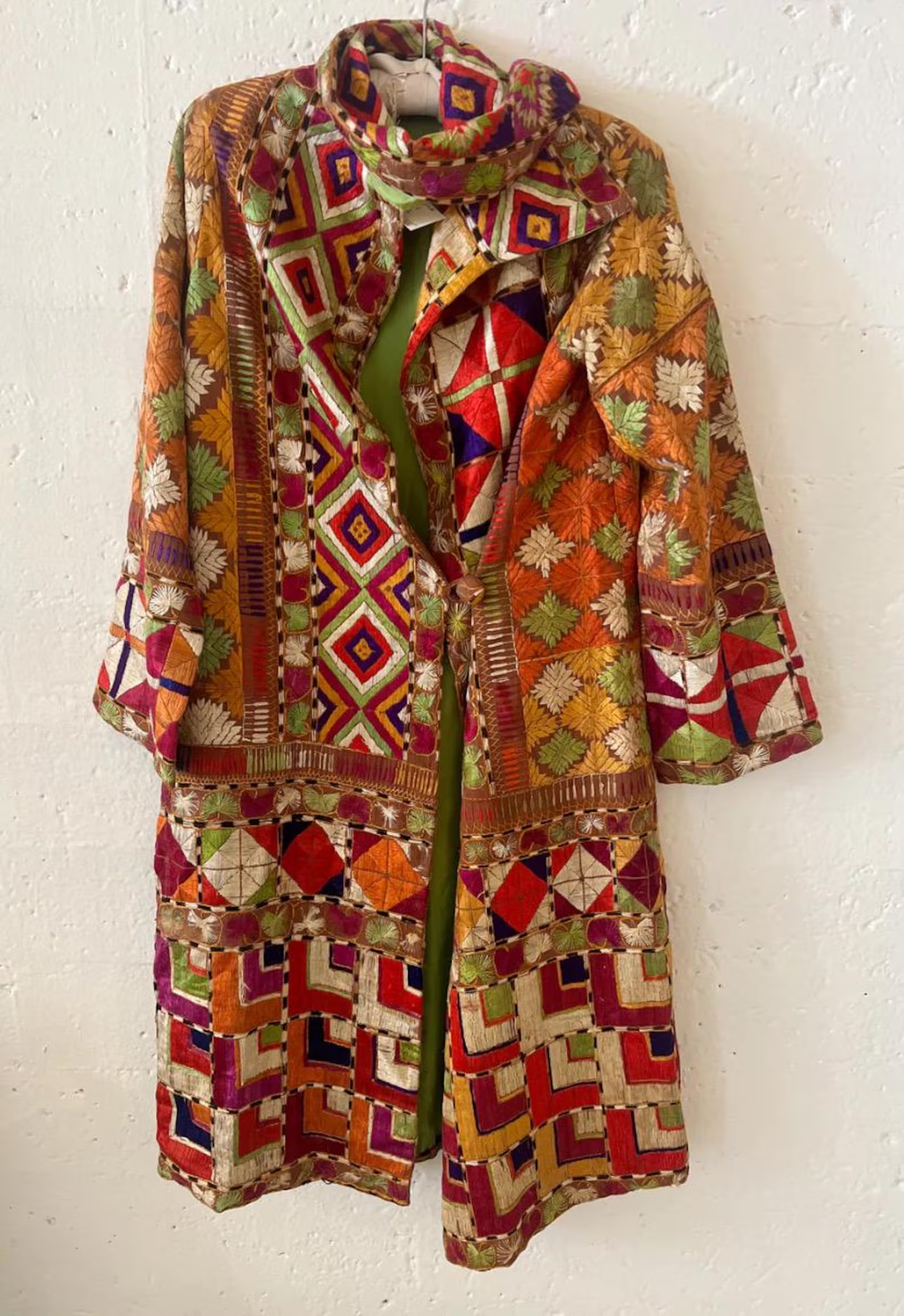
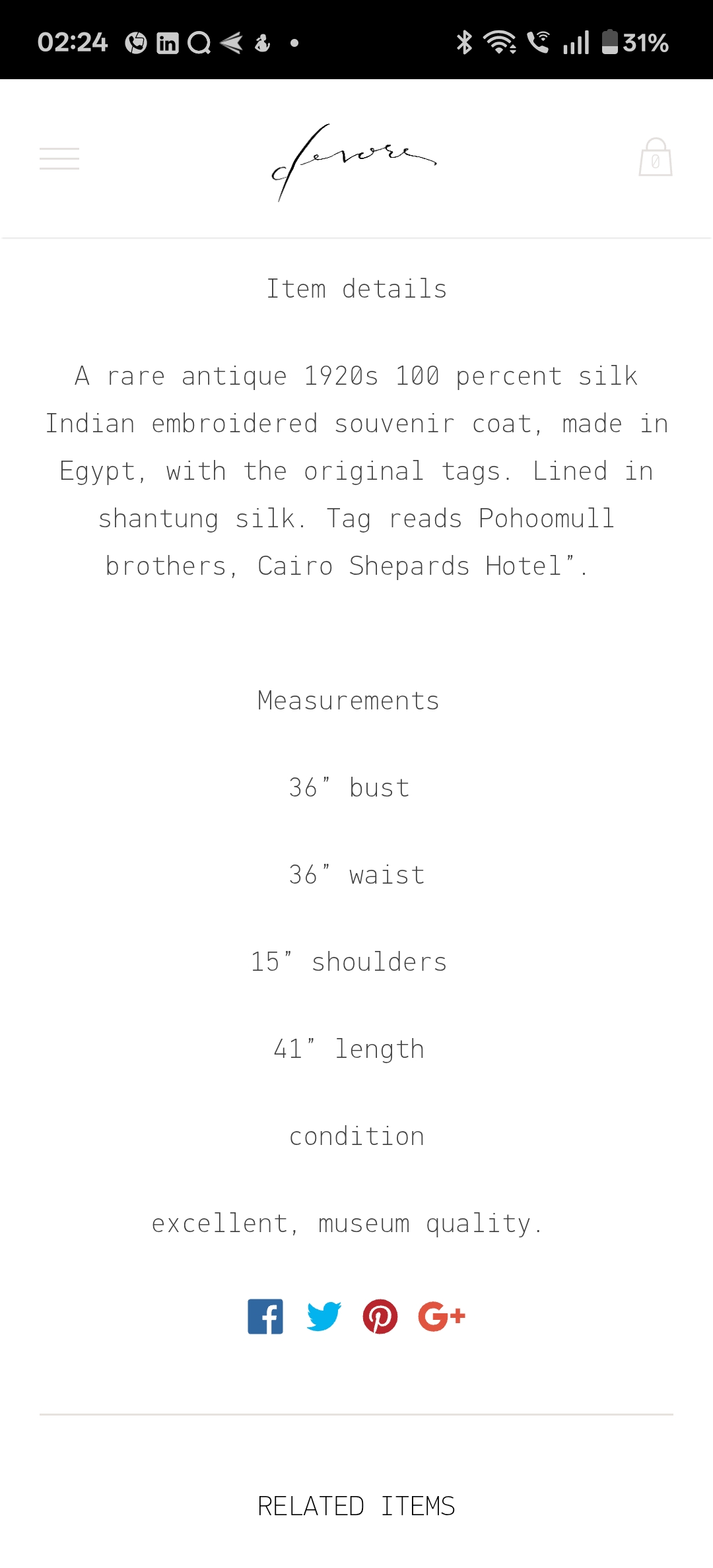
"In 1899 both Pohoomull Bros and Wassiamall Assomull advertised themselves as manufacturers of silver embroidery, a traditional craft of Sind. This direct link to craft production snapped as the productions of Sind were replaced by those of other areas."
Design and production · not just trade
Bose and His Movements · J.B.P. More · 2025 · Page 90
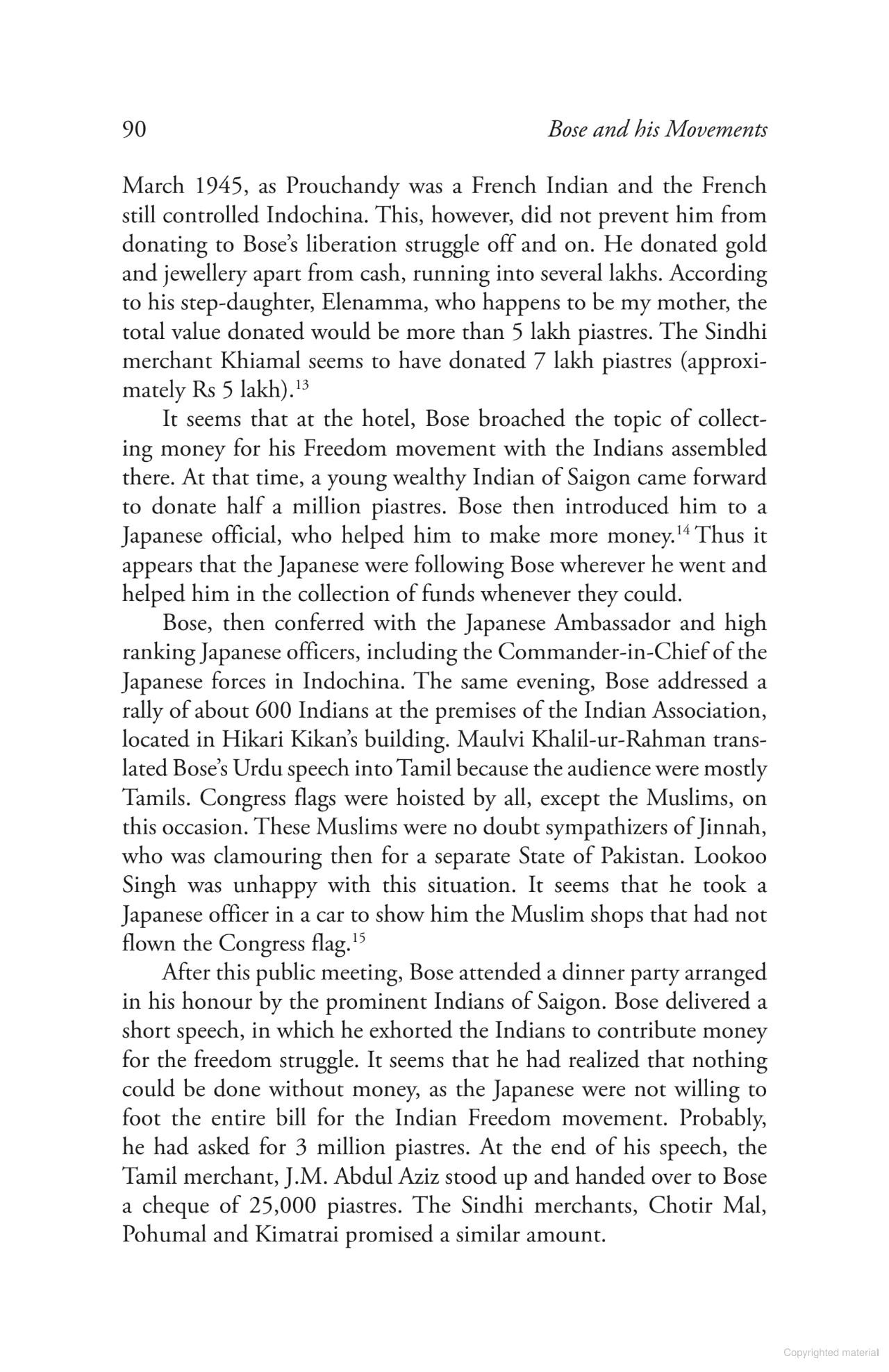
"At the end of his speech, the Tamil merchant, J.M. Abdul Aziz stood up and handed over to Bose a cheque of 25,000 piastres. The Sindhi merchants, Chotir Mal, Pohumal and Kimatrai promised a similar amount."
Subhas Chandra Bose collecting funds in Saigon, March 1945 · Pohumal named directly
Indian Revolutionaries Abroad, 1905–1927 · Arun Bose · Northern Book Centre
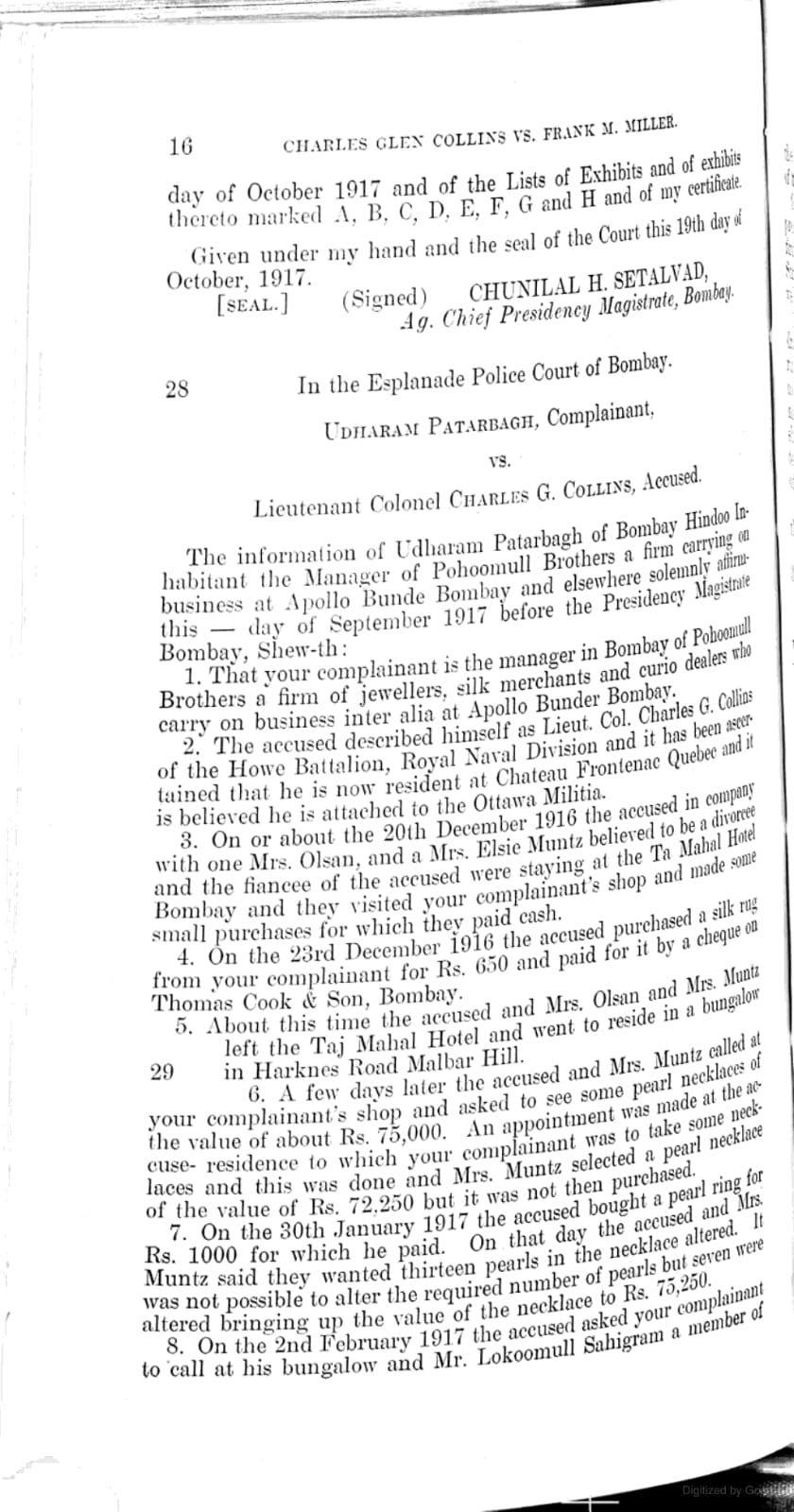
The Pohoomull family is named in this collection of select documents on Indian revolutionary activity abroad: direct documentary evidence of merchant funding for the independence struggle from overseas branches of the Sindwork network.
Documented in revolutionary select documents · not family legend
Pages 298–299 · Appendix I & II
"I the undersigned Fatumal Keumal Hindu aged 33 years of Hyderabad Sindh do hereby agree to enter the service of Messrs Pohoomull Brothers viz Mr Moolchand, Mr Lekhraj, Mr Sahijram sons of Khiamul on the following conditions…", signed 10 October 1901. A second contract, dated 1905, binds a servant to serve "the said master at Cairo (Egypt) or any other part or place" for three years.
The 1901 & 1905 employment contracts · naming the founding brothers